
GHANA'S MALARIA BREAKTHROUGH THREATENED BY GLOBAL AID CUTS
GHANA'S MALARIA BREAKTHROUGH THREATENED BY GLOBAL AID CUTS

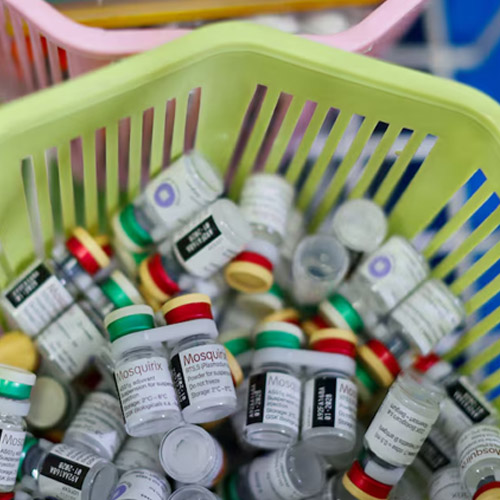
In the country of Ghana, they're on the cusp of achieving what was once an impossible endeavor; virtually eliminating childhood deaths from malaria. Two groundbreaking vaccines have helped drive mortality rates down by an astonishing 86% in just six years, demonstrating the life-saving potential of immunization against one of Africa's deadliest diseases.
But just as this medical triumph begins to take hold, a harsh reality looms. Recent cuts to international aid programs threaten to curtail vaccine access across the African continent, where malaria kills nearly half a million young children annually.
A Game-Changing Intervention
The transformation in Ghana has been nothing short of remarkable. According to government health data, confirmed malaria deaths among children under five plummeted from 245 in 2018 to just 35 in 2024. Nearly 1,000 children in that age group died each year from the disease just a decade earlier.
Dr. Selorm Kutsoati, who oversees Ghana's immunization program, doesn't mince words about the impact. "For me, the malaria vaccine is a game-changer," she said.
The vaccines—one developed by GSK and another created through collaboration between Oxford University and India's Serum Institute—work alongside existing prevention methods like insecticide-treated bed nets and antimalarial medications. Clinical trials show the vaccines reduce malaria cases by over 50% during the first year after three doses, with a fourth booster needed before age two to maintain protection.
While this efficacy rate falls short of many common childhood vaccines, supporters point to Ghana's real-world results as proof that even partial protection translates into countless lives saved. Malaria infections nationwide dropped from approximately 6.7 million in 2018 to 5.3 million in 2024, with about one-fifth occurring in children under five.

Personal Stories of Hope
For Esther Kolan, a 31-year-old clothing trader from Kasoa, the decision to vaccinate her son Phenehas was deeply personal. Her brother died of malaria just before his 15th birthday. Her daughter was hospitalized twice with the disease before turning three.
"I told myself, no matter the condition, I have to go for the vaccine," Kolan recalled. Her family also uses bed nets at night as an additional precaution.
Now, after three doses, one-year-old Phenehas has never been hospitalized with malaria. "This has really helped me a lot," his mother said, already planning to get him his booster shot. "I was not scared for my child."
A Funding Crisis
Despite these successes, the vaccine roll-out faces significant headwinds. Gavi, the international alliance currently serving as the sole purchaser of malaria vaccines for African nations, is grappling with a substantial funding shortfall.
Internal documents prepared for Gavi's board of directors in December reveal the organization fell $2.9 billion short of its overall funding target for the next five years. As a result, Gavi anticipates spending just over $800 million on malaria vaccines during this period—28% less than what's needed.
The shortfall stems from aid reductions by multiple wealthy governments, including the Trump administration. According to Gavi's modeling, conducted by researchers at Imperial College London and the Swiss Tropical and Public Health Institute, these cuts could result in an additional 19,000 deaths due to lower vaccination rates.
The funding gap comes at a critical juncture. After years of limited supply that restricted the vaccines to pilot programs in Ghana, Kenya, and Malawi, availability has improved with the approval of the second vaccine. Seventeen African countries—accounting for roughly 70% of the global malaria burden—now offer the vaccines through their routine immunization programs.
Between 2026 and 2030, Gavi aims to help countries reach at least 50 million children with malaria vaccines. Achieving this goal hinges on successful fundraising efforts, including a March 2025 event where Gavi, the European Union, and the Bill & Melinda Gates Foundation hope to secure at least $9 billion from donors.
The Challenges Ahead
Sub-Saharan Africa faces unique obstacles in the fight against malaria where the disease is the most prominent. Many affected countries rank among the world's poorest, with severely under-resourced health systems. The predominant malaria strain in the region proves particularly lethal, and growing resistance to preventive and treatment drugs compounds the problem. Conflicts and natural disasters have repeatedly disrupted control efforts.
Some regions have managed to effectively eliminate malaria without a vaccine, but experts say the combination of economic challenges, infrastructure limitations, and the virulent local strain make vaccines essential for progress in Africa.
The World Health Organization has endorsed both vaccines for use in areas with moderate to high malaria transmission. Ghana, Kenya, and Malawi began their vaccine programs in 2019 as part of a WHO-led pilot that demonstrated a 13% reduction in overall child mortality where the vaccines were deployed.
Fourteen additional countries introduced the vaccines in 2024, including Cameroon, Burkina Faso, Nigeria, and the Democratic Republic of Congo. Early anecdotal reports suggest reductions in cases, hospitalizations, and deaths among young children, though comprehensive impact data will take years to compile.

A Race Against Time
As Ghana's experience shows, malaria vaccines work. Combined with other interventions, they're saving lives and bringing the dream of elimination within reach. But whether that success can be replicated across Africa depends on sustained international commitment.
For families like the Kolans, the stakes couldn't be higher. Each dose represents not just a medical intervention, but hope—hope that the next generation might grow up free from a disease that has claimed too many young lives for far too long.
The question now is whether the global community will provide the resources needed to make that hope a reality.
A child under five years old dies of malaria almost every minute. The vaccines offer a chance to change that—if funding can be continued.
Related News .
Stay updated with the most important events.