

5 PRICES THAT WILL RISE BESIDES GAS BECAUSE OF THE IRAN–U.S.–ISRAEL WAR
5 PRICES THAT WILL RISE BESIDES GAS BECAUSE OF THE IRAN–U.S.–ISRAEL WAR

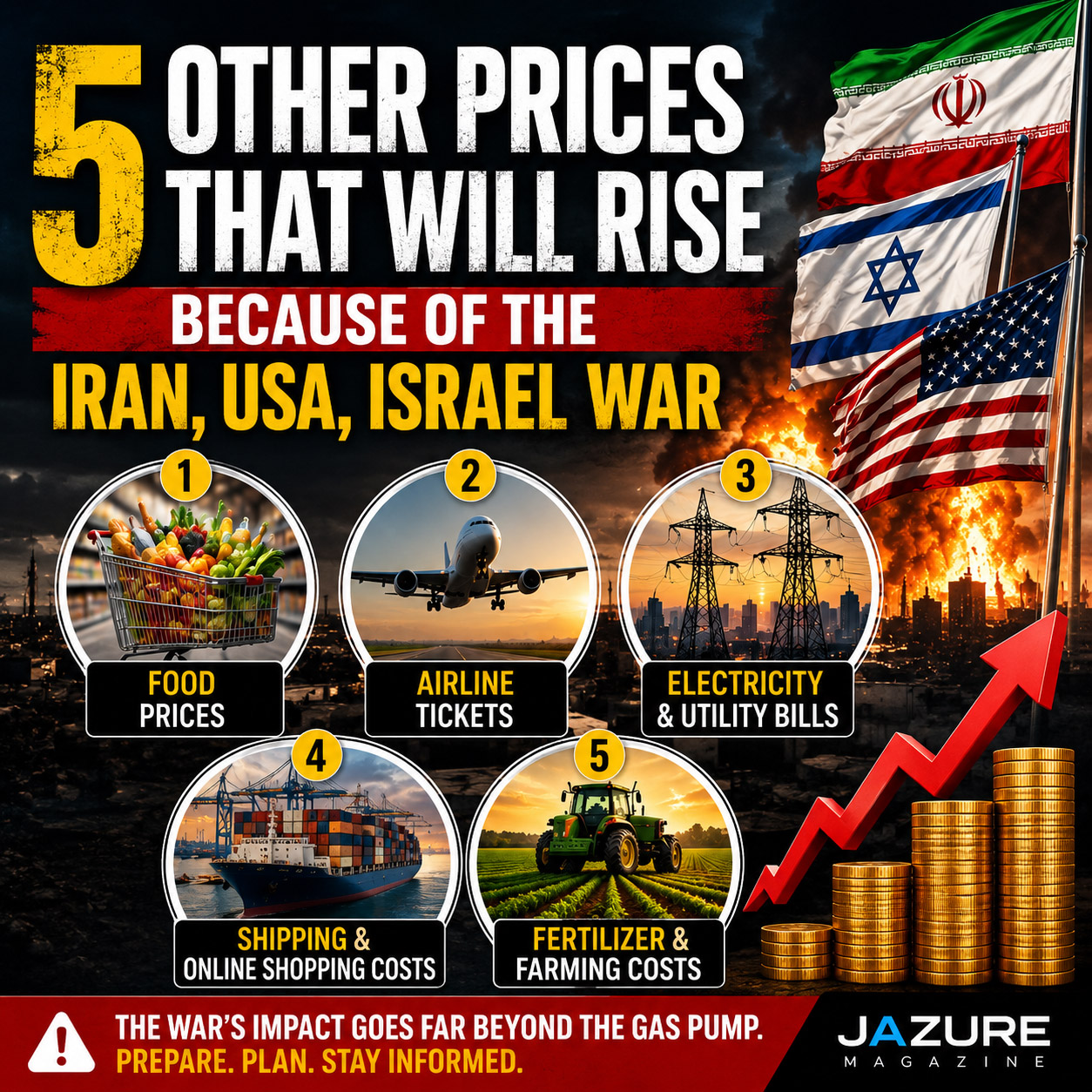
As hostility continues to rise between Iran, Israel, and the United States, many people are already noticing and increase at the gas pump. But gasoline is just the beginning. Global conflicts in the Middle East often trigger a chain reaction throughout the world economy, especially when shipping routes, oil production, and trade supplies are disrupted.
One of the biggest concerns is the Strait of Hormuz, a narrow waterway near Iran through which a major percentage of the world’s oil and natural gas passes. Attacks on ships and disruptions in the region have already created fears of shortages and inflation worldwide.
Here are five other prices that will most likely rise because of the on going conflict.
1. Food Prices
Food prices are often one of the first things to rise during a major energy crisis. Farmers rely heavily on fuel for tractors, irrigation systems, transportation, and food processing. Grocery stores also depend on trucking and refrigeration, both of which become more expensive when energy costs surge.
Experts say higher oil prices almost always lead to higher food prices over time. Wheat, rice, cooking oil, and meat could all become more expensive if the conflict continues. Some analysts are already warning about global food inflation reaching levels not seen in years.
In Iran itself, food prices have skyrocketed in recent months. Reports show that cooking oil, rice, and chicken prices have surged dramatically as the war disrupts imports and supply chains.
For American families, this could eventually mean paying more for groceries, restaurant meals, and even school lunches.
2. Airline Tickets
Air travel could also become significantly more expensive. Airlines are heavily dependent on jet fuel, and when oil prices rise, airlines usually pass those costs on to passengers.
The conflict has already caused some Middle Eastern airspaces to close temporarily, forcing airlines to reroute flights. Longer routes mean more fuel consumption and higher operational costs.
Travelers may begin seeing higher ticket prices for both domestic and international flights. Vacation costs could increase during summer and holiday seasons, especially for flights to Europe, Africa, and Asia.
This could also hurt tourism industries worldwide, as fewer people may be willing to travel if airfare becomes too expensive.
3. Electricity and Utility Bills
Many people forget that oil and natural gas help power electricity grids around the world. If the conflict disrupts natural gas exports from the Gulf region, electricity prices may rise in multiple countries.
Some experts warn that household utility bills could climb later this year if energy markets remain unstable.
This affects more than just air conditioning or heating. Higher electricity costs also increase business expenses, which can lead to more expensive products overall. Grocery stores, factories, warehouses, and shopping centers all consume large amounts of electricity.
For families already struggling with inflation, rising utility bills could add even more financial pressure.
4. Shipping and Online Shopping Costs
Global shipping routes are under pressure because of attacks and instability near the Strait of Hormuz. Cargo companies now face higher insurance costs, fuel costs, and security risks.
When shipping becomes more expensive, consumers usually feel the effects later through higher retail prices. Everything from electronics to clothing to household goods may cost more because businesses must pay extra to transport products around the world.
Online shopping could also become pricier. Companies like Amazon sellers and international retailers often depend on global shipping networks. If container costs rise, many businesses will likely raise prices to protect profits.
Some economists believe supply chain disruptions could eventually resemble the shortages seen during the COVID-19 pandemic if the conflict escalates further.
5. Fertilizer and Farming Costs
One lesser-known issue involves fertilizer. A large portion of the world’s fertilizer supply moves through the Strait of Hormuz. Natural gas is also a critical ingredient used to manufacture many fertilizers.
If fertilizer prices rise, farmers around the world may face higher production costs. Those costs often get passed down to consumers through more expensive fruits, vegetables, grains, and meat.
This creates a dangerous cycle: higher energy prices raise fertilizer costs, fertilizer costs raise farming costs, and farming costs raise food prices.
Economists fear that prolonged instability in the Middle East could create lasting inflation throughout the global economy.
Despite repeated talks of a ceasefire, no one knows how long the conflict will continue. One thing is becoming clear: the economic effects will stretch far beyond the gas pump.
Related News .
Stay updated with the most important events.