

US DIPLOMATS BLOCKED AID WORKERS' INTO GAZA WARNING ABOUT 'APOCALYPTIC' CONDITIONS
US DIPLOMATS BLOCKED AID WORKERS' INTO GAZA WARNING ABOUT 'APOCALYPTIC' CONDITIONS

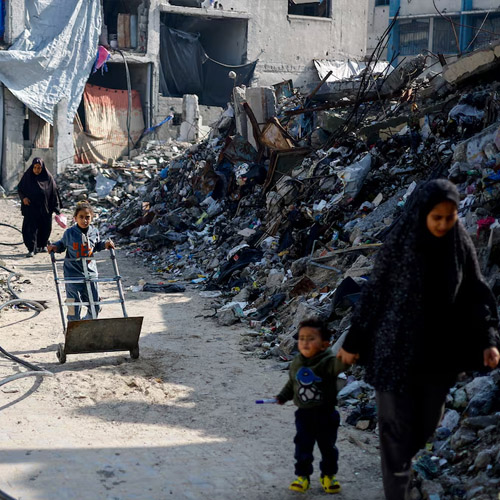
WASHINGTON DC — In early 2024, U.S. Agency for International Development (USAID) staffers attempted to sound an alarm about catastrophic conditions in northern Gaza, drafting urgent internal messages that described the area as an "Apocalyptic Wasteland" suffering severe food and medical shortages.
Those warnings never reached key decision-makers within the Biden administration. Ambassador to Jerusalem Jack Lew and his deputy, Stephanie Hallett, blocked the cables from wider distribution within the government, citing concerns that the reports lacked proper a balance, according to interviews with four former officials.
Gruesome Findings Suppressed About Gaza
The internal messages drew on observations from United Nations staff who conducted humanitarian fact-finding missions to Gaza in January and February 2024, three months after Hamas's October 7, 2023 attacks and Israel's subsequent military response.
UN personnel reported disturbing scenes: human bones scattered on roads, bodies abandoned in vehicles, and what they characterized as "catastrophic human needs, particularly for food and safe drinking water."
The blocked cable detailed these conditions in graphic detail, painting a picture of humanitarian devastation that some U.S. diplomats in Jerusalem apparently felt was too one-sided to share.
Questions About Sources and Verification
The suppression of these warnings reflects deeper tensions within the Biden administration over how to assess and respond to the humanitarian crisis in Gaza.
Because USAID has maintained no staff presence inside Gaza since 2019, much of the agency's reporting relied on information from UN agencies—including UNRWA, the Palestinian refugee agency—and international aid organizations funded by the U.S. government.
That dependence on third-party sources contributed to skepticism among some Biden officials about USAID's assessments, three former U.S. officials told Reuters. Biden's Middle East envoy Brett McGurk and his aides frequently questioned in meetings whether USAID had independently verified the information and why it sometimes differed drastically from Israel's account of conditions on the ground.
"The question was always like 'where are all the skinny kids?'" one former official recalled.
McGurk declined to comment about this story.
A Few Warnings Did Get Through
The Jerusalem embassy did approve wider distribution of at least one cable in January 2024 that addressed food insecurity throughout Gaza. That report examined famine risks in northern Gaza and potential severe food shortages across the rest of the territory due to limited food deliveries.
The information from that cable made it into the President's Daily Brief—a compilation by the intelligence community of the most critical national security information and analysis provided to the president each morning.
According to sources, it represented one of the first detailed USAID reports on the rapidly deteriorating situation inside Gaza, including worsening food insecurity in the southern areas of the enclave.
Editorial Interference
Deputy Chief of Mission Hallett sometimes requested that cables be reframed or edited, according to two former officials. In one instance, she questioned whether a health-focused cable was even necessary, arguing that much of the information was already publicly available.
This pattern of intervention raises questions about whether diplomatic concerns about maintaining relations with Israel took precedence over accurately conveying humanitarian conditions to policymakers in Washington.
Biden's Public Statements vs. Internal Suppression
The tension between what diplomats allowed to be reported internally and what President Biden said publicly became evident in February 2024, when he told White House reporters: "There are a lot of innocent people who are starving, a lot of innocent people who are in trouble and dying, and it's got to stop."
Biden described Israel's military response in Gaza as "over the top"—a characterization that suggests he may not have received the full scope of information his own aid workers were attempting to report.
The Broader Context
The death toll in Gaza has now surpassed 71,000, according to Palestinian Health Ministry data.
Despite a ceasefire brokered by the Trump administration, violence has continued. Palestinian health officials report that 481 people have been killed since the ceasefire went into effect, with ongoing violations of the agreement.
The Biden administration's strong support for Israel during the Gaza war created deep divisions within the Democratic Party—a political fracture that remains unresolved. A Reuters/Ipsos poll from August 2024 found that more than 80% of Democrats believed Israel's military response had been excessive and that the United States should provide assistance to Palestinians facing starvation.
Questions About Humanitarian Expertise
Until USAID was significantly reduced by the Trump administration, U.S. officials relied heavily on the agency's on-the-ground reporting in situations where diplomatic presence and human intelligence were limited.
The blocking of these Gaza cables raises broader questions about whether humanitarian expertise was sidelined in favor of diplomatic and political considerations—and whether American policymakers had access to the full picture of what was happening on the ground.
For an administration that publicly expressed concern about civilian suffering in Gaza, the internal suppression of detailed warnings about catastrophic conditions suggests a more complicated reality: one where information that might complicate U.S.-Israel relations was filtered before it could reach key decision-makers.
Related News .
Stay updated with the most important events.