

FIVE WAYS THE WAR IN IRAN WILL HIT HOME FOR AMERICANS
FIVE WAYS THE WAR IN IRAN WILL HIT HOME FOR AMERICANS

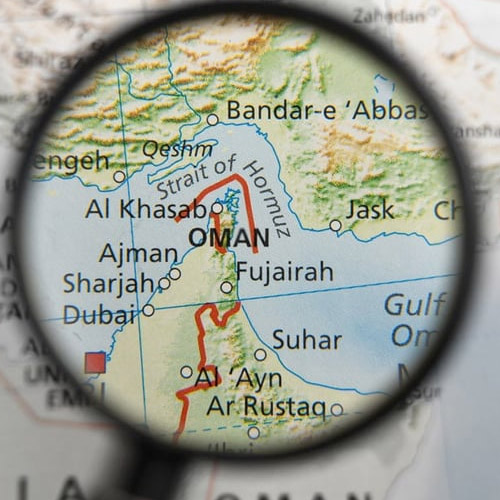
The latest escalation in the U.S.-Israeli war with Iran — now entering its fourth week — is no longer just a Middle Eastern crisis. In retaliation to Israeli and U.S airstrikes, Iran has declared it will strike the energy and water systems of its Gulf neighbors if President Trump follows through on his threat to destroy Iran's electricity grid, deepening a regional war that is already rattling global markets. For many Americans, this may feel distant — but the ripple effects could be felt across kitchen tables, gas stations, financial portfolios, and military families from coast to coast.
Here are five concrete ways this crisis could impact American citizens.
1. Skyrocketing Gas Prices at the Pump
If you haven't already noticed, the most immediate and widespread consequence for Americans would be a sharp spike in fuel costs. Iran has effectively closed the Strait of Hormuz, which connects the Persian Gulf to the rest of the world, and attacks on ships have stopped nearly all tanker traffic. Roughly one-fifth of the world's oil supply normally passes through it. Iran's Revolutionary Guards warned that the Strait of Hormuz will be "completely closed and will not be opened" until Iranian power plants are rebuilt.
With a chokepoint responsible for 20% of global oil supply blocked — and Iran now threatening to strike Gulf energy infrastructure on top of that — crude oil prices could surge dramatically. Americans already stretched by the cost of living would feel this at every fill-up, and the downstream effect on the price of goods transported by truck would push grocery and retail prices higher as well. U.S. Treasury Secretary Bessent warned that without deliberate policy intervention, oil prices could spike as high as $150 per barrel.
2. Market Turmoil and Damage to Retirement Savings
The prospect of tit-for-tat strikes on civilian infrastructure threatens to further rattle global markets when they reopen. For the millions of Americans whose retirement security is tied to 401(k)s, IRAs, and pension funds — all of which are exposed to global equity and energy markets — a sustained Middle East conflict of this scale poses a real financial threat.
Defense stocks may rise, but broader market uncertainty tends to hurt the average investor. Energy-sector disruptions of this magnitude historically trigger sell-offs in travel, manufacturing, and consumer goods industries. Americans close to retirement age are especially vulnerable, as a major market correction could significantly reduce the nest egg they've spent decades building.
3. Deepening U.S. Military Commitment and Potential for American Casualties
Iran's parliament speaker warned that "entities that finance the US military budget are legitimate targets," a statement widely interpreted as a direct threat against American interests and personnel. The U.S. military is already actively engaged in this conflict.
The Republican-led Congress has approved record military funding, with Trump signing the Fiscal 2026 Defense Appropriations Act at roughly $840 billion, and an additional $156 billion for defense passed in a sweeping tax and spending bill. As the conflict escalates, the chances of American service members being killed or wounded in action increase — a deeply personal consequence for the hundreds of thousands of military families across the United States.
4. Higher Prices for Consumer Goods and Supply Chain Disruptions
Beyond fuel, the Strait of Hormuz is a critical corridor for liquefied natural gas (LNG) as well. The Revolutionary Guards confirmed that the shipping lane, through which a fifth of global oil and liquefied natural gas normally transits, would remain shut. Natural gas feeds heating systems, electricity generation, and manufacturing plants across America.
If global LNG supplies are squeezed — particularly during peak demand seasons — American consumers and businesses will feel it in utility bills and the cost of manufactured goods. Industries like chemicals, plastics, fertilizers, and steel are particularly sensitive to energy input costs. American farmers, who rely heavily on natural-gas-derived fertilizers, could face rising costs that eventually translate to higher grocery prices for everyday consumers.
5. A Looming Humanitarian and Refugee Crisis With Global Repercussions
Electricity makes Gulf cities habitable, in part by powering the desalination plants that produce 100% of the water consumed in Bahrain and Qatar, more than 80% of drinking water needs in the UAE, and 50% of the water supply in Saudi Arabia. If Iran strikes these facilities, the human cost would be staggering — and history shows that major humanitarian crises in the Middle East do not stay contained.
A large-scale refugee crisis would strain U.S. allies in Europe and the broader region, force difficult foreign policy decisions in Washington, and potentially require costly U.S.-funded humanitarian intervention. Additionally, Lebanon has already seen more than 1,000 people killed and over 1 million displaced since the conflict began — and that's before any strike on Gulf desalination infrastructure. American taxpayers often bear a significant portion of the cost of international humanitarian response, through agencies like USAID and contributions to the UN.
Related News .
Stay updated with the most important events.