
WHY WEMBANYAMA COULD BECOME MOST INFLUENTIAL ATHLETE SINCE ZIDANE
WHY WEMBANYAMA COULD BECOME MOST INFLUENTIAL ATHLETE SINCE ZIDANE

There is a particular kind of athlete who transcends their sport entirely. Not merely the best player in a league, but a figure who carries a nation's identity on their shoulders, reshaping how the world sees the country that produced them. France has known this kind of athlete before. For a generation, Zinedine Zidane was that figure — the son of Algerian immigrants whose grace, genius, and singular brilliance on a football pitch made him the embodiment of France's multicultural soul. When Zidane lifted the World Cup in 1998, he lifted something in France itself.
Now, nearly thirty years later, something remarkable is happening again.
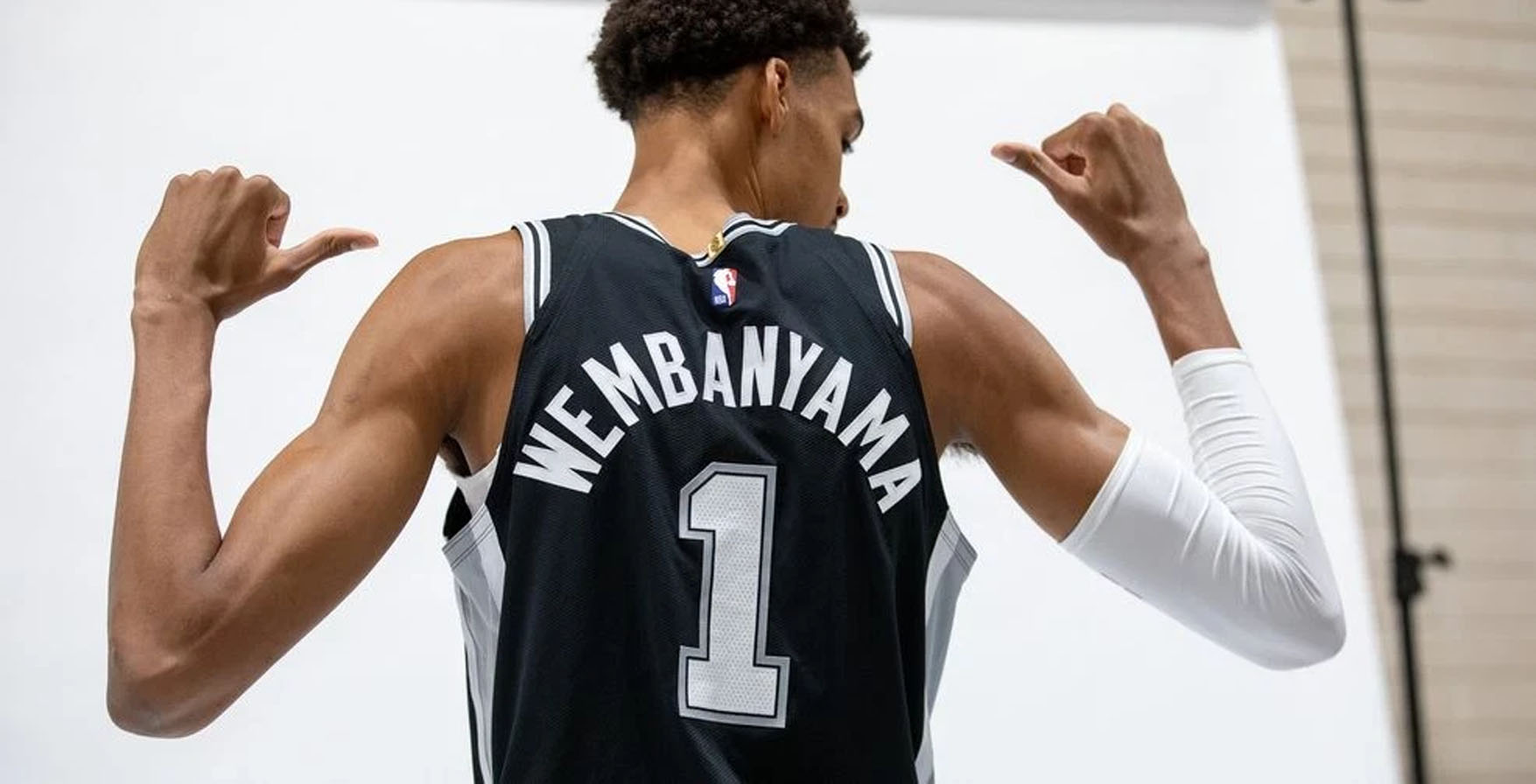
Victor Wembanyama — 22 years old, 7 feet 4 inches tall, born in a suburb fifteen miles west of Paris — is in the process of becoming the most globally significant French athlete of his generation. And despite his team losing in the NBA Finals, the parallels to Zidane run deeper than most realize.
The Physical Impossibility
Before the cultural conversation can begin, you have to reckon with what Wembanyama actually does on a basketball court, because nothing quite prepares you for it. Standing 7'4" and weighing 235 pounds, he plays forward-center for the San Antonio Spurs — but those measurements alone tell you nothing. What makes him genuinely unprecedented is the combination: a wingspan that stretches eight feet across a body that moves with the coordination of a six-foot point guard. His defensive impact is often measured not just by the shots he blocks, but by the shots opponents refuse to take — "Wemby-fear," as it's come to be known, where driving guards see him in the paint and immediately retreat to the perimeter.
In the 2025-26 season, he has averaged 24.3 points, 11.2 rebounds, and 3.0 blocks across 52 games, leading the league in blocks while simultaneously launching step-back three-pointers that have no business going in from a player his size. He has spent his recovery time learning footwork techniques from Hall of Famer Hakeem Olajuwon and, perhaps more remarkably, spent several weeks training in kung fu and Buddhist meditation at the famed Shaolin Temple in China. This is not the profile of a player who merely plays basketball. This is someone constructing something larger than a career.
When LeBron James first saw him play and called him an "Alien" — not a Unicorn, but an Alien — he was saying something important. Unicorns are rare. Aliens are entirely outside the frame of reference.
A French Story, Complicated and Rich
Like Zidane before him, Wembanyama's story is not a simple one of national triumph. Born in 2004 in Le Chesnay, a suburb west of Paris, his background reflects a rich cultural tapestry: his mother, Elodie de Fautereau, is a former basketball player and coach, while his father, Felix Wembanyama, hails from the Republic of the Congo. He is, in the truest sense, a product of what France at its best can produce — a child of the African diaspora who grew up absorbing European basketball intelligence and translating it into something the world had never seen.
That complexity, however, has not insulated him from a familiar French cultural friction. Critics in France argue that Wemby has not lifted French basketball domestically, with local leagues and national team games still struggling to sustain attention beyond global events. Journalist Philippe Sanfourche describes France as an "event" country where stars spark brief excitement rather than long-term growth. French commentator Maxime Aubin noted that while many in France are proud of him, there remain voices who say, "This guy has done nothing in basketball. Where is this hype coming from?"
Sound familiar? Zidane faced his own complicated relationship with French identity — celebrated by the nation when it was convenient, scrutinized when it was not. The tension between immigrant heritage and national pride is a story France keeps telling itself, through sport, whether it is ready to or not. What Wembanyama represents — consciously or not — is that chapter's next installment.
The Global Stage He's Building
Where Zidane's influence was, for all its magnitude, anchored to the football world and to Europe, Wembanyama is operating on a genuinely different scale. When the San Antonio Spurs traveled to Paris for the 2025 NBA Paris Games, the Accor Arena sold out twice in less than 24 hours, with fans arriving from 53 different countries. This was not merely a basketball event. It was a homecoming for a generation of young French fans who had found, for the first time, a basketball player they could claim as entirely their own.
His rise is evidence of the culmination of decades of athletic, cultural, and diplomatic collaboration between France and the United States in expanding the global reach of basketball — a story not simply about talent alone, but about globalization, strategic investment, and cultural exchange. The path from Tony Parker to Wembanyama is a decades-long project of French institutional investment in basketball academies and elite development, and Wembanyama is its most luminous result.
NBA Commissioner Adam Silver has discussed the possibility of an NBA Europe league, a conversation that Wembanyama's emergence has accelerated. The sport is reorganizing itself around his existence in ways that haven't happened since Michael Jordan made the NBA a global property in the 1990s.
What Influence Actually Means
Zidane's influence was not simply about trophies, though he won many. It was about what he represented at a particular cultural and political moment in France — proof that the children of immigrants could be the face of the nation, that excellence did not require choosing between identities. He was French and Algerian, and France was better for both.
Wembanyama is now carrying something similar, whether he chooses to or not. In an era of rising nationalism across Europe, in a France still arguing about its own identity, a 22-year-old from the Paris suburbs with Congolese roots is the face of the most globally watched basketball league in history. He is simultaneously a source of French pride and a symbol of what French society still struggles to fully embrace.
The difference between a great athlete and an influential one is whether their story outlasts their statistics. Zidane's did. Everything about Victor Wembanyama — the improbable body, the meditative focus, the diasporic identity, the sport that is still in the process of conquering Europe — suggests his will too.
France has seen this kind of athlete before, but not like this.
JAZURE Magazine covers global politics, culture, and the stories that connect American audiences to the world.
Related News .
Stay updated with the most important events.