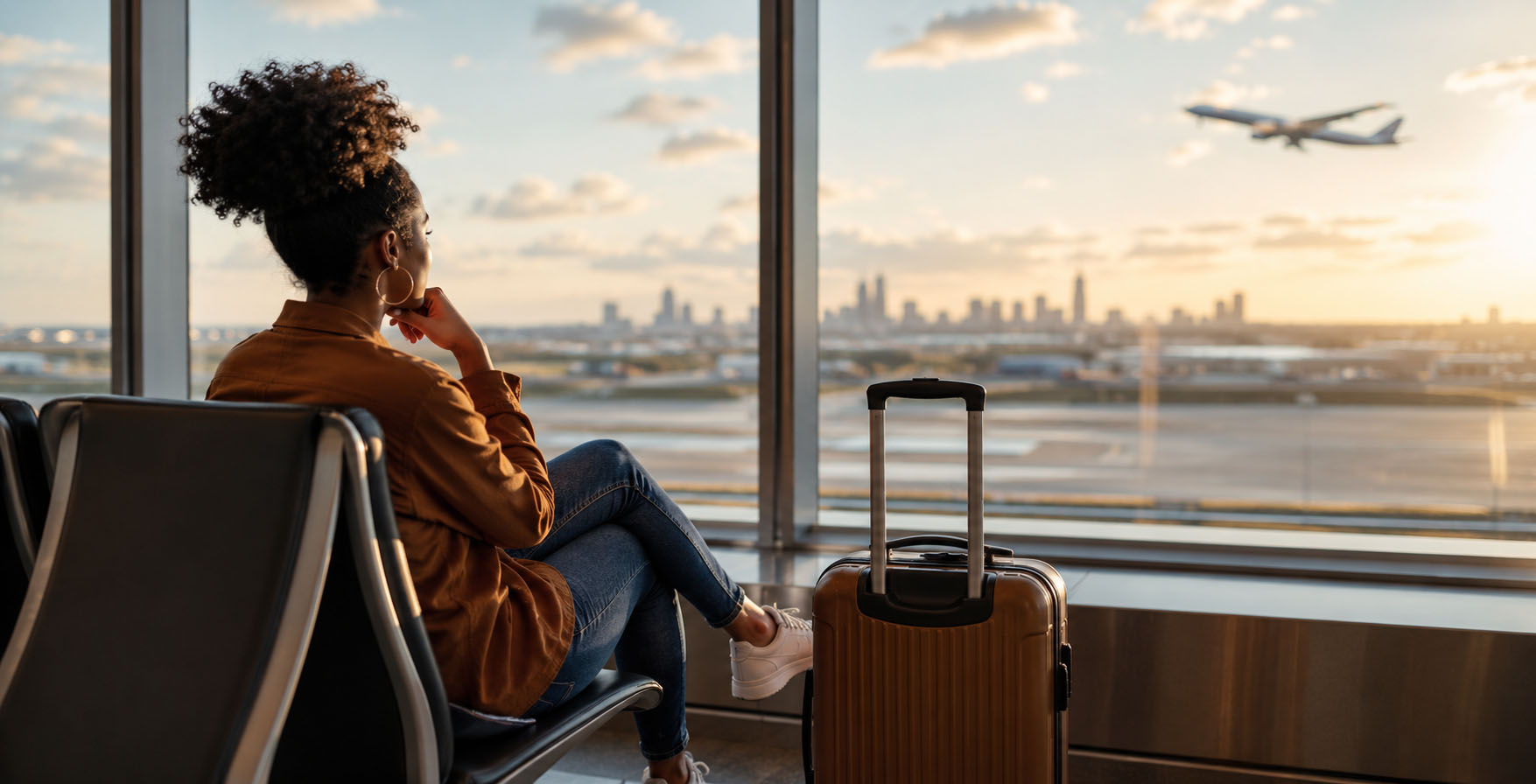

SEVEN PLACES NOT SAFE TO TRAVEL BECAUSE OF THE IRAN–ISRAEL WAR
SEVEN PLACES NOT SAFE TO TRAVEL BECAUSE OF THE IRAN–ISRAEL WAR

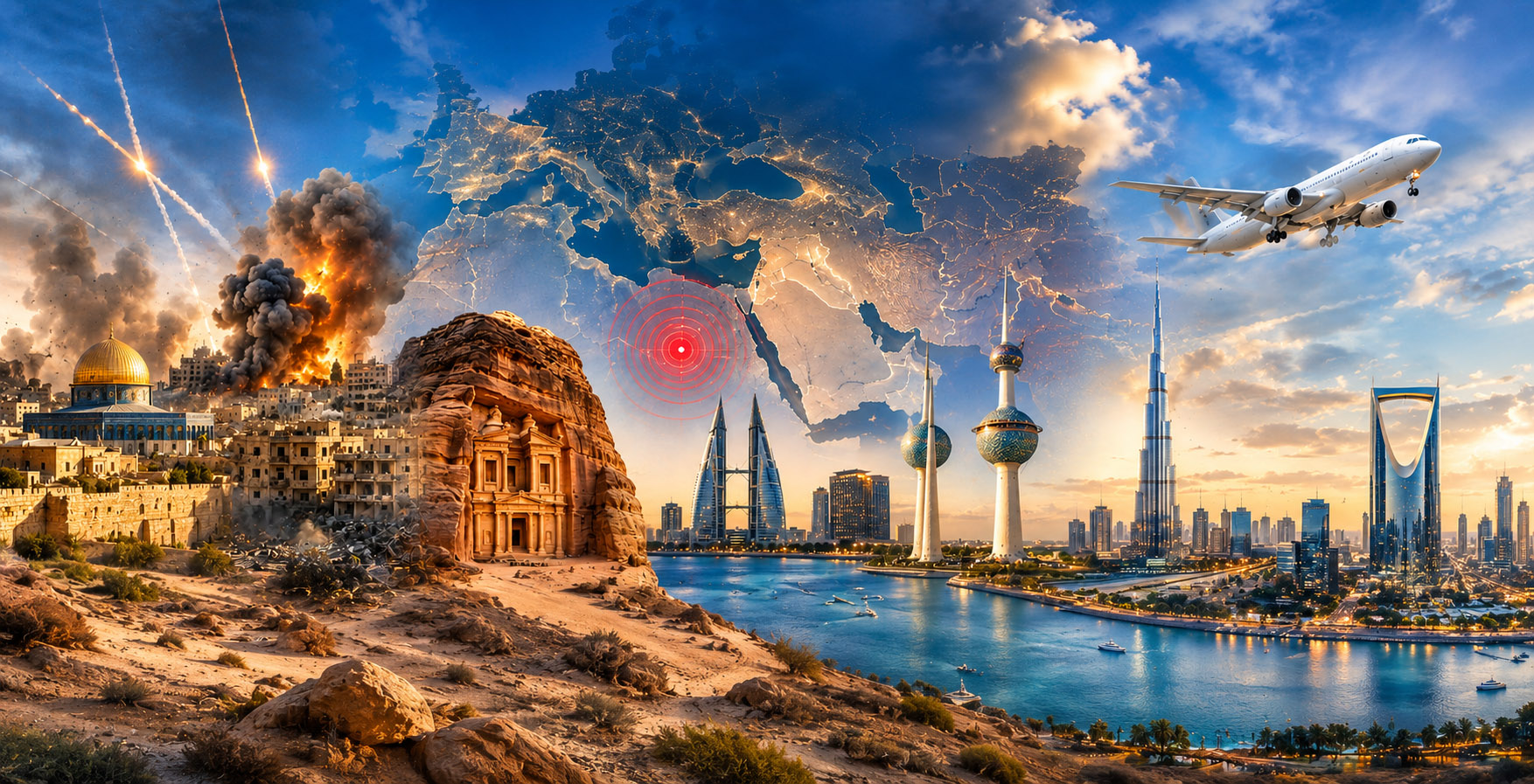
From the shattered neighborhoods of southern Lebanon to the crowded departure halls of Gulf airports, the conflict that erupted between Iran, Israel, and their allies has transformed one of the world's busiest travel corridors into a region of uncertainty.
When the United States and Israel launched coordinated strikes against Iranian nuclear and military facilities, few expected the conflict to spread so rapidly beyond national borders. Iran's retaliation — involving ballistic missiles, drones, and proxy forces operating across the Middle East — quickly altered the security landscape for millions of residents, tourists, and business travelers.
The Middle East serves as one of the world's most important transportation hubs, connecting Europe, Africa, and Asia. You may have heard of the Straight of Hormuz by now. Today, that network faces unprecedented strain. Airspace closures, missile interceptions, military deployments, and regional instability have forced governments and airlines to reassess travel throughout the region.
For travelers planning international trips, one question has become increasingly important:
Which destinations are no longer worth the risk?
Below, our team at JAZURE examines seven destinations where the dangers associated with the ongoing Iran-Israel conflict have raised serious concerns for visitors.
No. 1 — Israel & the Occupied Territories
No country has felt the immediate consequences of the conflict more directly than Israel.
Since the outbreak of hostilities, the country has faced repeated missile and drone attacks from multiple directions. Iranian ballistic missiles, Hezbollah rockets from Lebanon, and attacks originating from Yemen have forced millions of residents to seek shelter on numerous occasions.
Air defense systems continue to intercept incoming projectiles, but even successful interceptions can create hazards for civilians as debris falls across populated areas. Airports have faced disruptions, airlines have reduced service, and many governments have issued severe travel warnings.
The risks extend beyond missile attacks. Tensions remain elevated throughout the West Bank and Gaza, where security incidents can develop with little warning.
For tourists hoping to visit Jerusalem, Tel Aviv, or the Dead Sea, the security environment remains highly unpredictable. Until hostilities cease and stability returns, Israel remains one of the most dangerous destinations in the region.
No. 2 — Lebanon
Lebanon entered the conflict already burdened by economic collapse, political dysfunction, and years of instability.
The activation of Hezbollah as a major participant in the conflict transformed southern Lebanon into one of the most volatile areas in the Middle East. Missile launches, drone operations, and retaliatory Israeli airstrikes have displaced large numbers of civilians and created ongoing security concerns throughout the country.
While Beirut remains the nation's political and economic center, even the capital has experienced growing uncertainty as the conflict continues. Tourism, once a vital source of revenue, has suffered significantly as visitors cancel plans and international airlines reconsider routes.
The images emerging from southern Lebanon — damaged villages, displaced families, and military activity near civilian communities — illustrate the difficult reality facing the country.
For travelers, Lebanon currently represents one of the highest-risk destinations in the region.
"The conflict has not only struck individual destinations — it has struck the very architecture of global tourism connectivity."
No. 3 — Jordan
Jordan has long been considered one of the safest and most welcoming destinations in the Middle East.
Home to Petra, Wadi Rum, and the Dead Sea, the kingdom has built a reputation as a stable gateway for travelers exploring the region. Yet geography has placed Jordan in an increasingly difficult position.
Located between Israel, Syria, Iraq, and Saudi Arabia, Jordan sits directly beneath several routes used by missiles and drones traveling across the region. The country's air defenses have repeatedly responded to projectiles crossing its airspace, and authorities have remained on heightened alert since the conflict began.
Although Jordan remains considerably safer than active combat zones, the possibility of accidental spillover, temporary airspace closures, and regional escalation has raised concerns among security experts.
For now, Jordan remains open to visitors, but the conflict has introduced risks that simply did not exist before.
No. 4 — Bahrain
Small in size but enormous in strategic importance, Bahrain occupies a uniquely vulnerable position in the Gulf.
The island nation hosts major American military facilities and sits just across the water from Iran. In any wider confrontation involving the United States and Iran, Bahrain's military significance makes it a potential target.
Government officials have increased security around critical infrastructure, transportation hubs, and military installations throughout the conflict. While daily life largely continues as normal, the possibility of escalation remains a constant concern.
For travelers, Bahrain's greatest challenge is not necessarily what has happened so far, but what could happen if the conflict widens further.
Its location places it near the center of one of the world's most dangerous geopolitical flashpoints.
No. 5 — Kuwait
Kuwait's history has long been shaped by regional conflict, and the current crisis has once again highlighted the country's strategic importance.
Situated between Iraq and Saudi Arabia and facing Iran across the Gulf, Kuwait hosts important American military assets and serves as a key logistical hub for regional operations.
Security analysts have warned that military installations, energy facilities, and transportation infrastructure could become vulnerable in the event of broader escalation.
While Kuwait remains relatively stable compared to other countries on this list, travelers must recognize that the country's strategic position places it within the potential radius of future military activity.
In an unpredictable conflict, proximity alone can create significant risk.
No. 6 — The United Arab Emirates, Including Dubai
Few entries on this list surprise travelers more than the United Arab Emirates.
For years, Dubai cultivated a global image of luxury, safety, and modernity. Millions of visitors traveled annually to experience its skyscrapers, shopping centers, beaches, and world-class hospitality.
Yet the conflict has demonstrated that even the Gulf's most successful tourism destination is not immune to regional instability.
The UAE's strategic partnerships and geographic location have increased concerns about potential military retaliation and security threats. Airspace disruptions, emergency preparedness measures, and heightened security have become part of daily life in ways few visitors expected.
Although the UAE remains one of the safest countries in the Middle East overall, the perception of complete immunity from regional conflict has been challenged.
For travelers seeking certainty, that distinction matters.
No. 7 — Saudi Arabia
Saudi Arabia entered the crisis as one of the most influential players in the region.
Its strategic partnership with the United States, combined with its energy infrastructure and growing tourism ambitions, has made the kingdom a significant stakeholder in the broader conflict.
Military facilities, oil infrastructure, and transportation networks remain potential targets in any prolonged confrontation. Security concerns have forced authorities to increase defensive measures across the country.
The timing is particularly unfortunate for Saudi Arabia's tourism industry. Massive investments tied to Vision 2030 have sought to transform the kingdom into a major international destination, attracting visitors to projects such as NEOM, the Red Sea coast, and the historic desert landscapes of AlUla.
While many of these destinations remain operational, the uncertainty generated by regional instability has complicated those ambitions.
For travelers, Saudi Arabia currently represents a destination whose future depends heavily on how the conflict evolves.
The Bigger Picture
The broader implications extend far beyond the Middle East.
When instability affects those networks, travelers everywhere feel the consequences. Flights become longer. Routes become more expensive. Airlines adjust schedules. Tourism declines.
The economic impact can be measured in billions of dollars.
The human impact is far more difficult to calculate.
Families have been displaced. Businesses have suffered. Travelers have found themselves stranded far from home. Communities that depend on tourism have watched visitors disappear almost overnight.
Travel has always represented connection — a bridge between cultures, nations, and people. The Iran-Israel conflict has not simply disrupted flights and vacations. It has disrupted that connection itself.
Until stability returns, travelers should monitor government advisories carefully, remain informed about regional developments, and approach travel plans with caution.
The Middle East has overcome crises before. The hope throughout the region is that it will do so again.
JAZURE Magazine covers global politics, culture, and the ideas that move between borders. For more stories like this, visit jazuremagazine.com.
Related News .
Stay updated with the most important events.